

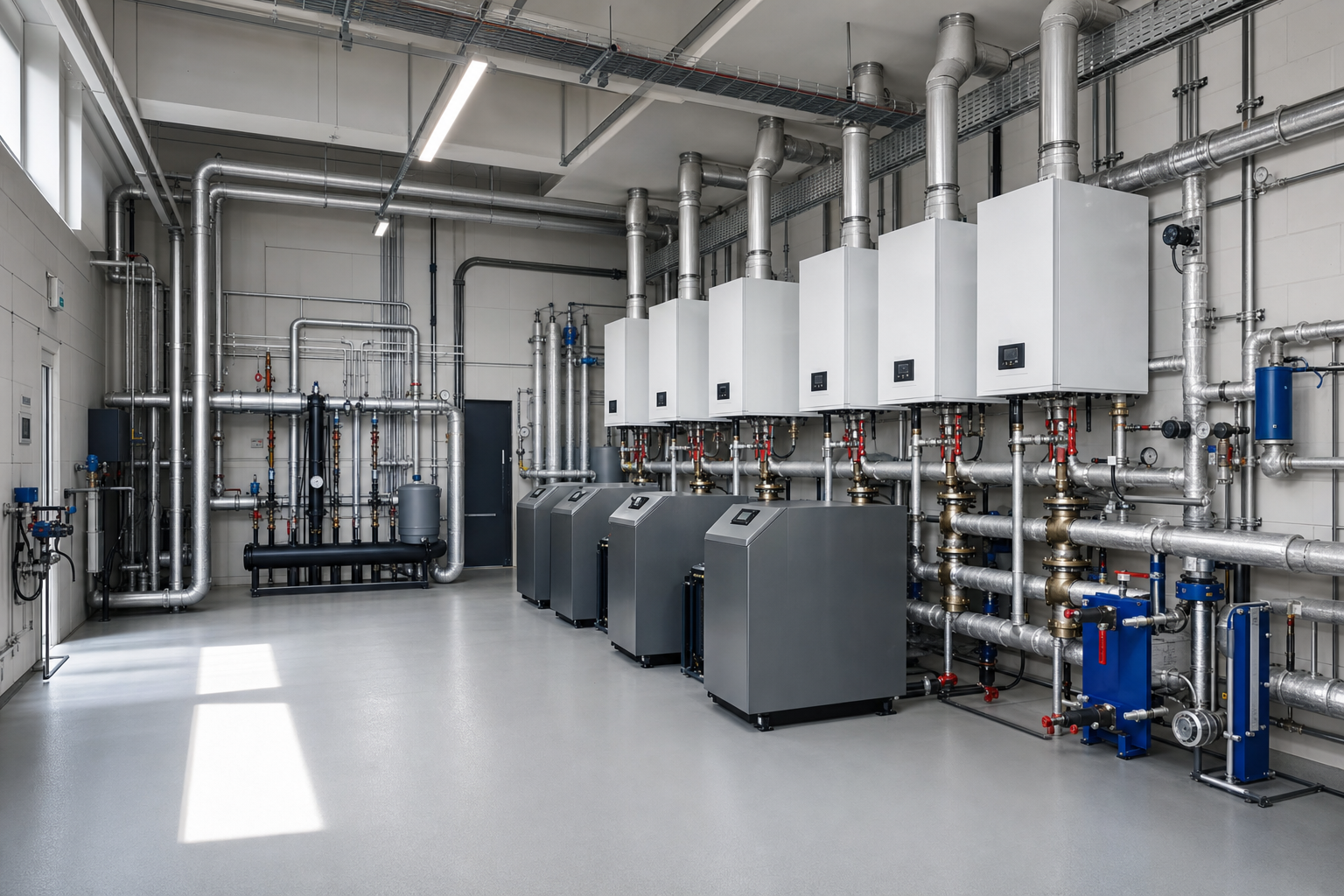
Why commercial boiler planning matters
Load matched properly
Equipment choice follows real demand and occupancy, not a rough guess from the doorway.
Control integration checked
The new boiler is planned to work with the wider system and site controls.
Access and phasing considered
We plan around plant rooms, restrictions and staged return to service where sensible.
A commercial boiler has to suit the whole system
Commercial boiler installation is shaped by far more than the appliance itself. We assess heat demand, occupancy, operating patterns, existing plant, the distribution network, controls, flue arrangements and service connections before equipment is selected. That matters because a new commercial boiler has to work as part of the wider heating system, not as a lonely island of fresh paint in a tired plant room. With PDF Plumbing & Heating, the installation plan follows how the building actually runs, which is exactly where a lot of avoidable trouble starts or ends.
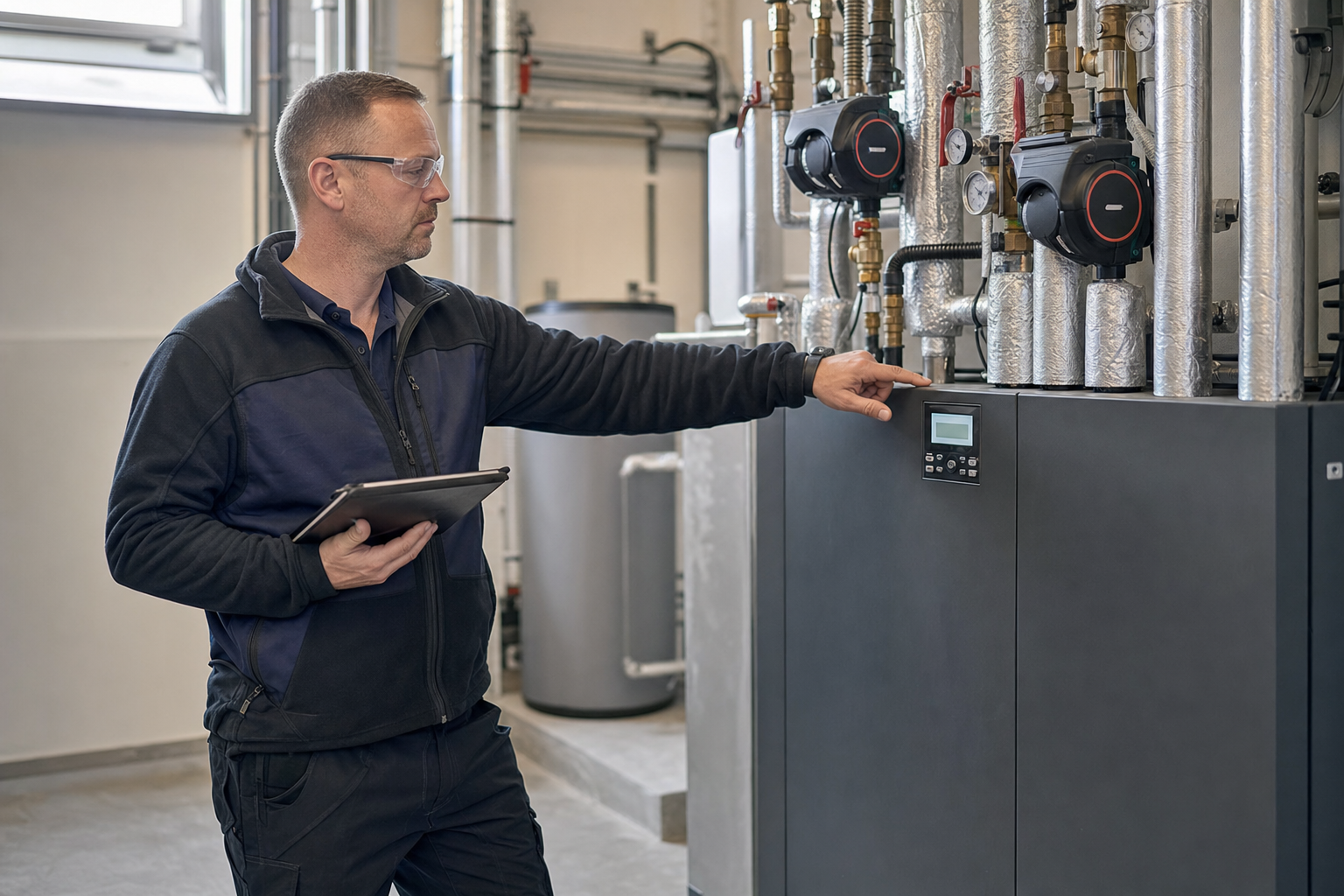
Planned removal, fitting and return to service
Before work starts, we consider access restrictions, positioning, connection routes, control integration and how the site can be brought back into service in a sensible order. On some jobs, staging is the practical answer so disruption is controlled and key areas stay workable. PDF Plumbing & Heating keeps the focus on continuity as well as fitting, because a commercial boiler job is only partly about the day it is lifted into place. The rest is about how well the new arrangement serves the building afterwards.
Frequently asked questions
What is assessed before a commercial boiler is chosen?
We review the existing plant, system load, controls, distribution network, flue arrangements and service connections, along with how the building is occupied and used. Those checks help ensure the boiler arrangement fits the wider system rather than being selected in isolation and made to fit later.
Can the installation be planned around site operations?
Yes. Where the site needs it, we can plan removal, positioning, connections and return to service in a staged way. That helps when access is restricted, when different areas depend on the same plant or when business operations limit how much of the system can be taken offline at once.
Why does the wider system matter in a boiler install?
Because a commercial boiler does not work alone. Controls, distribution, flues, pipework and connected plant all affect performance. Treating the boiler as an isolated swap can create fresh problems elsewhere. We plan the installation so the new equipment makes sense within the heating system it has to serve every day.