


What a good solar setup depends on
Compatibility checked first
Cylinder choice, plant space and existing equipment all matter before fitting begins.
Supports hot water, not fantasy
We explain clearly how solar thermal works alongside a suitable backup heat source.
Controls made understandable
You get a proper handover so normal operation and performance changes are easier to spot.
How solar hot water fits the wider system
Solar hot water is not a magic box that replaces the whole heating setup. A wet system uses collectors, a transfer circuit, controls and compatible hot-water storage to contribute to water heating alongside a suitable backup heat source. We assess demand, collector positioning, cylinder compatibility, available plant space and how the new equipment will integrate with what is already there. With PDF Plumbing & Heating, the goal is a solar setup that works sensibly with the property instead of being forced into place because the roof looked inviting.
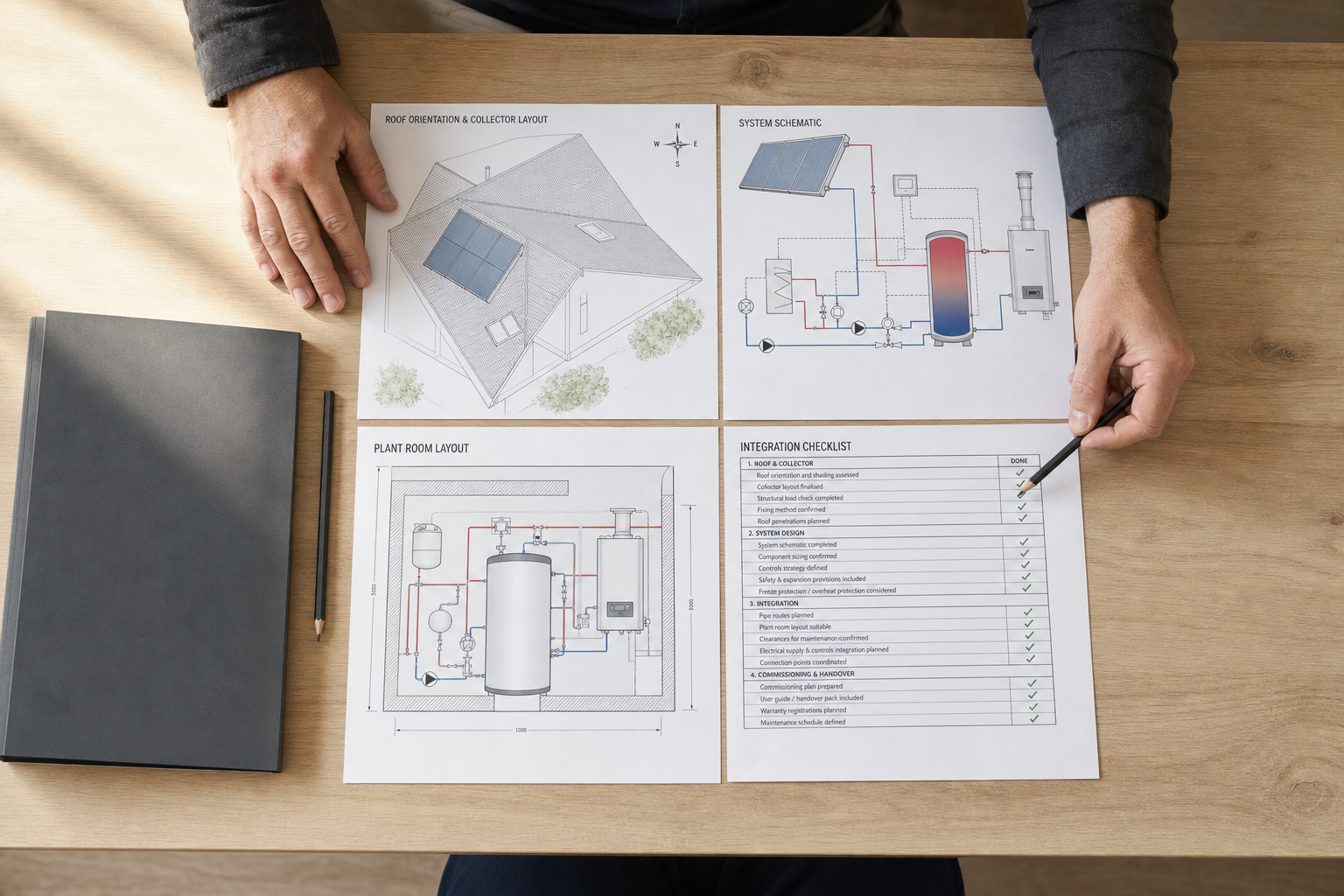
Designed, connected and handed over properly
Installation covers system design, component positioning, hydraulic connections, controls, testing and handover, so you understand how the system supports hot-water production and what normal operation looks like. We also explain the practical side of ownership, from monitoring controls to spotting changes in performance and keeping connected components in good order. PDF Plumbing & Heating keeps the language straight, because solar equipment is useful enough without anyone pretending it can bend the British weather to its will.
Frequently asked questions
Does solar water heating replace the whole heating system?
No. A wet solar hot-water system contributes to water heating and works alongside a suitable backup heat source. It is designed to support hot-water production rather than replace the whole building's heating demand. We explain how the solar side and the backup equipment work together before installation begins.
What do we assess before installation?
We look at hot-water demand, collector positioning, cylinder compatibility, available plant space and how the solar equipment will integrate with the existing system. Those checks matter because a solar installation only works well when the storage, controls and supporting equipment are matched properly from the start.
What should you expect after installation?
We complete testing and handover so you understand the controls, normal system behaviour and the signs that performance has changed. Solar thermal ownership is usually straightforward, but it still helps to know what the system should be doing. That way, small issues are more likely to be spotted before they become bigger ones.