

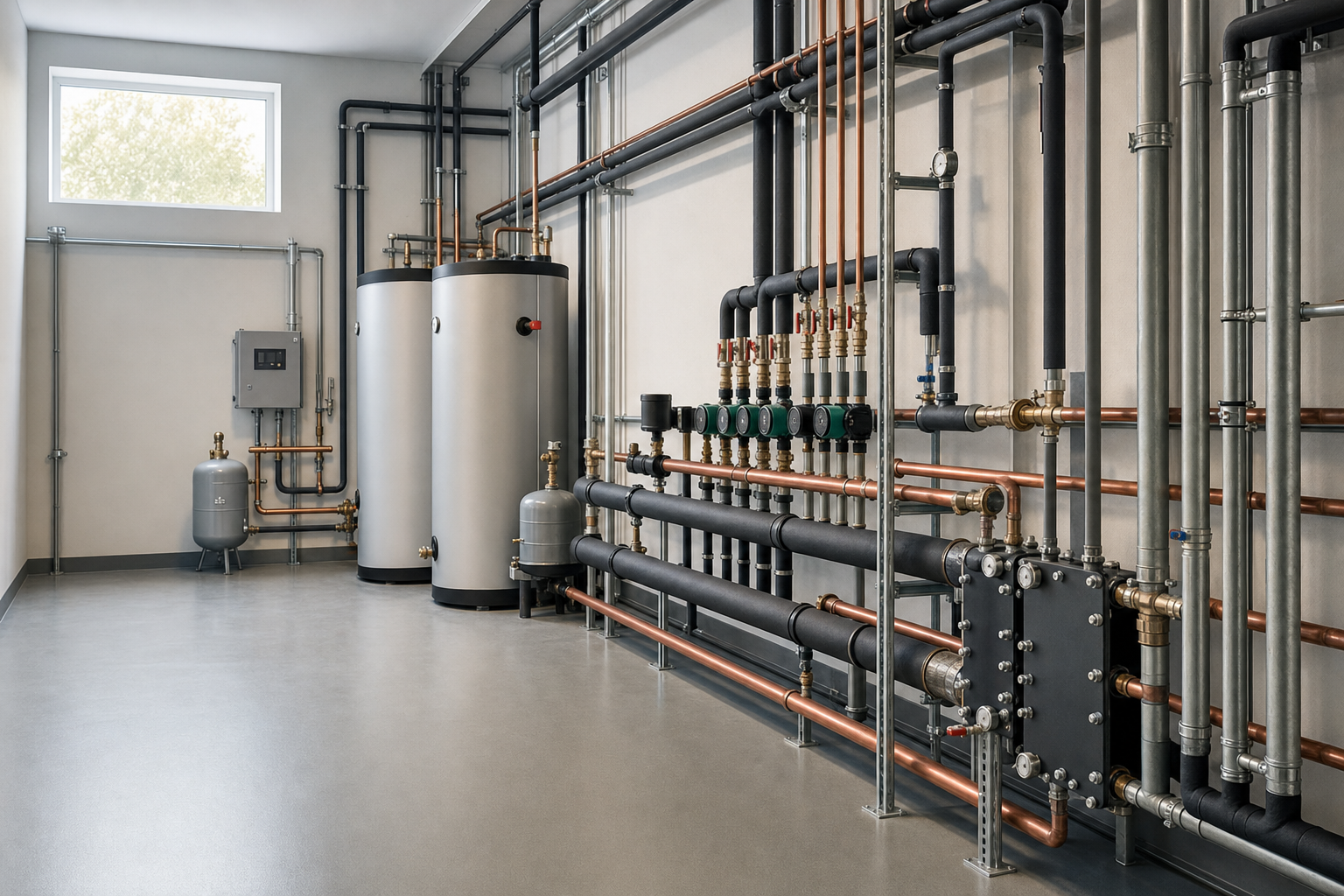
Why commercial sites call us
System-wide thinking
We assess boilers, pipework, hot water and plant as connected parts, not isolated jobs.
Bigger contract capability
Experience with larger work helps when access, phasing and coordination all matter.
Less avoidable downtime
Planning around site use helps reduce disruption for staff, tenants and occupants.
One provider across the wider system
Commercial plumbing and heating problems rarely stay in one neat corner. A fault may start at a boiler, pump, control, water service or plant connection, but the effect reaches offices, flats, washrooms, work areas or tenants very quickly. We take a site-based view of the system, looking at demand, access, operating priorities and the effect of downtime before the work plan is set. With PDF Plumbing & Heating, you are not dealing with separate people for every linked issue across pipework, heating equipment, hot-water provision and associated plant.
Planned in stages when the site demands it
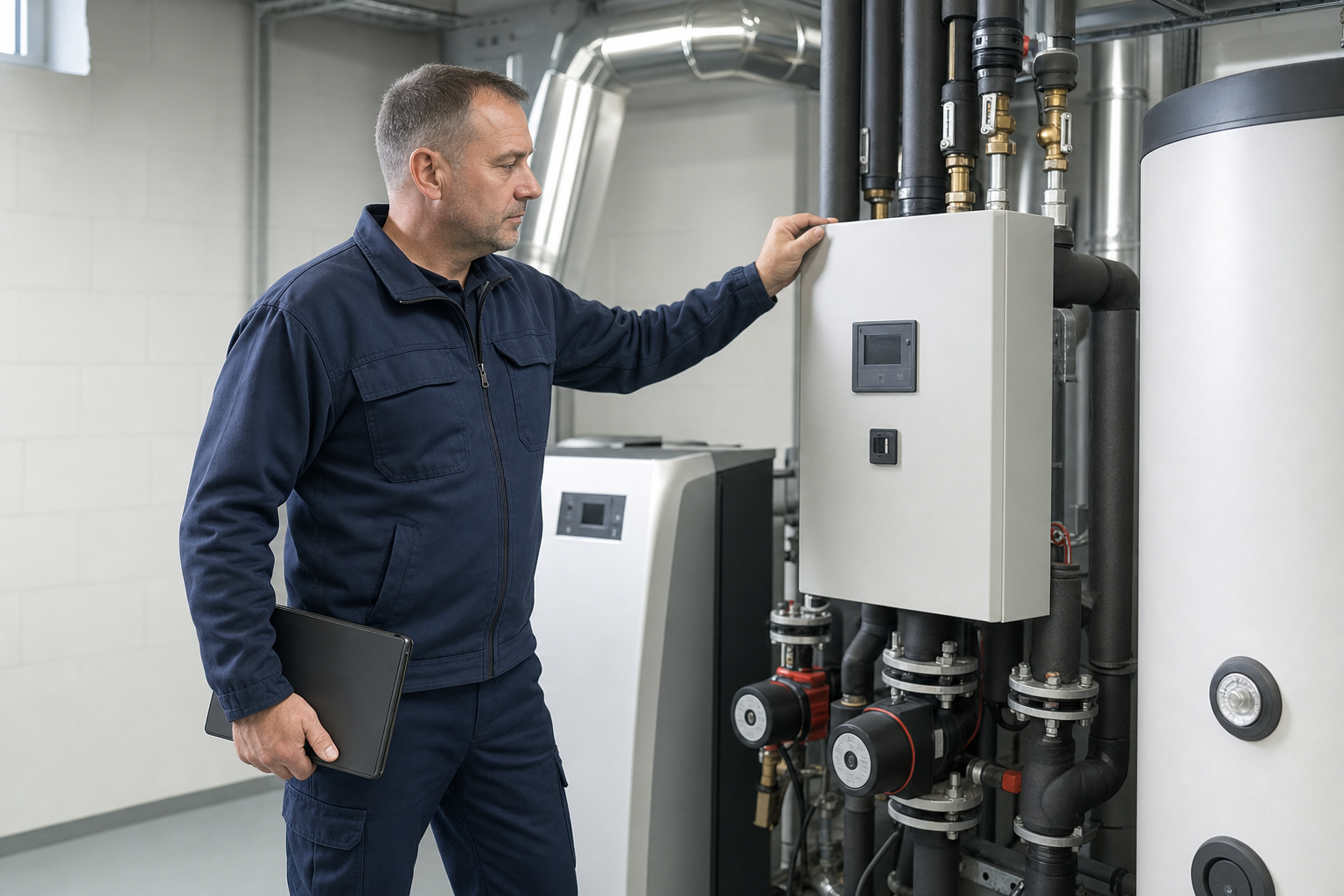
Larger commercial work often needs careful sequencing rather than one blunt shutdown. We can organise installation, repair, diagnostics and maintenance in stages so access, occupants and daily operations are properly considered before tools come out. That matters when a plant area is tight, when different parts of the building rely on the same system or when working hours limit what can sensibly be taken offline. PDF Plumbing & Heating keeps the focus on practical continuity as well as good workmanship, which is exactly what commercial sites tend to need.
Frequently asked questions
What kinds of commercial work do we handle?
We carry out commercial plumbing and heating work across planned installations, repairs, diagnostics and maintenance. That can involve commercial pipework, heating equipment, hot-water systems, boilers and related plant. The key point is that we assess how the wider site operates before deciding the best way to approach the job.
Why does site information matter before the visit?
Commercial systems often serve multiple occupants or operational areas, so details about access restrictions, affected zones, timing and the impact of downtime help shape the work plan. A repair at one end of the system can affect far more than one room, which is why context matters before we arrive.
Can larger contracts be phased to reduce disruption?
Yes, where the site and job allow it. We can plan work in stages so essential areas remain usable and access is coordinated properly. That approach is often sensible where commercial premises need continuity, where plant rooms are busy spaces or where several linked systems need attention over more than one visit.