

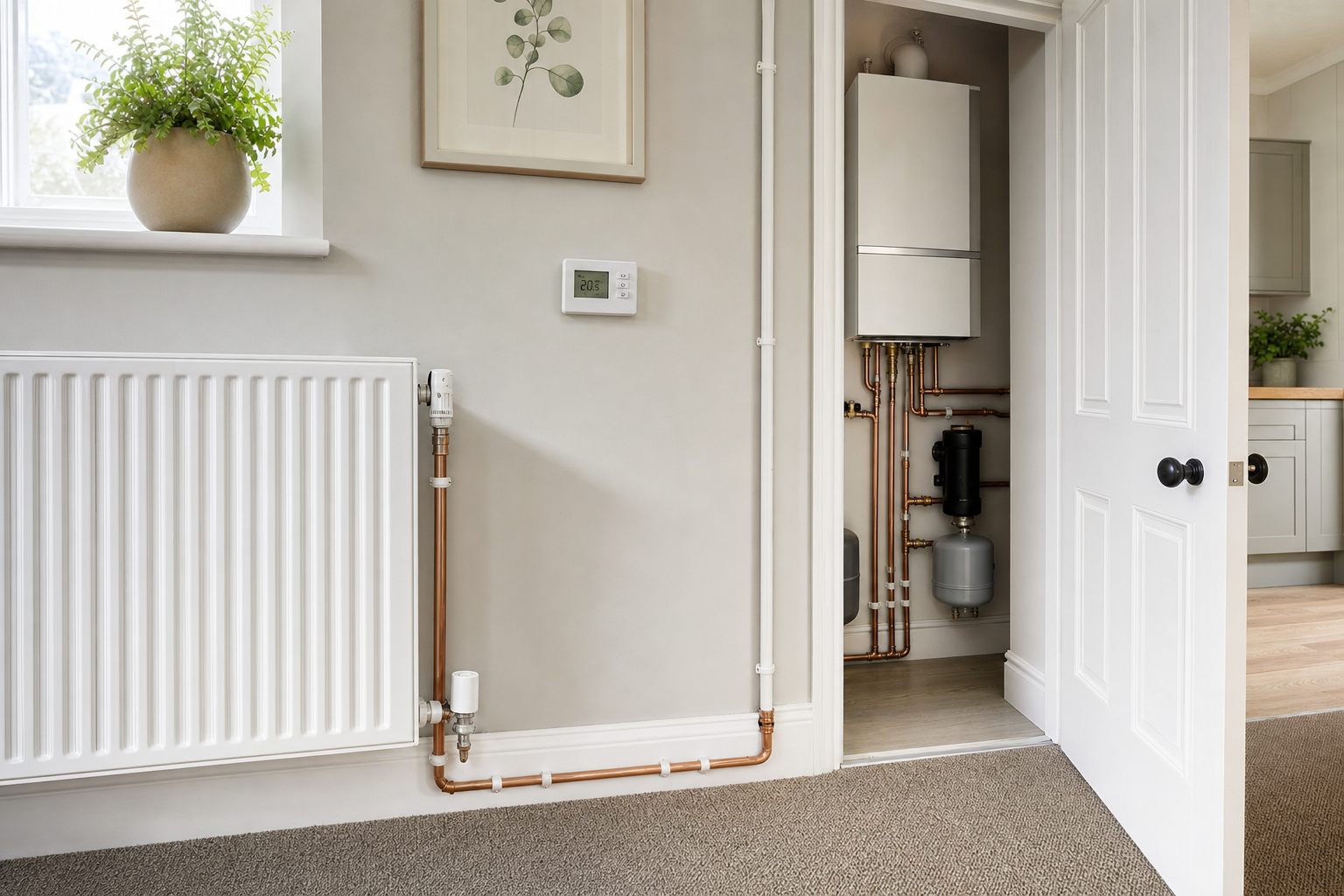
What good fault finding prevents
No random parts gamble
We trace the cause before replacing components, which helps avoid wasted time and money.
Whole system checked
Heat source, controls and circulation are reviewed together so wider issues are not missed.
Clear repair priorities
You get a sensible plan for the fault that is truly disrupting the system.
Cold rooms are usually just the symptom
When heating runs unevenly, loses pressure, makes odd noises, ignores the controls or leaves half the building cold, the trouble is not always where the symptom shows up. We work through the heat source, controls, pumps, valves, radiators, circulation, visible pipework and system pressure to separate the underlying cause from the effects you can feel. With PDF Plumbing & Heating, fault finding is not an excuse to stand about looking thoughtful near a thermostat. It is a structured process that helps stop repeated guesswork and repeated bills.

Diagnosis first, then the right repair path
Once we know what is disrupting circulation or heat delivery, we can explain the repair route clearly and put the priority in the right place. That may mean dealing with the failed part itself or addressing a wider system condition that made the fault appear in the first place. After the diagnostic work, we test response, circulation and heat distribution so the findings stand up in real use. PDF Plumbing & Heating keeps the focus on solving the actual system problem, not just quietening the loudest complaint for a day or two.
Frequently asked questions
What problems point to heating fault diagnosis?
It is useful when the heating behaves unevenly, loses pressure, makes unusual noises, fails to follow the controls or leaves some rooms cold. Those symptoms can stem from more than one cause, so a structured diagnosis helps show whether the issue sits with circulation, controls, the heat source or another part of the system.
Why not just replace the part that looks suspicious?
Because symptoms can mislead. A noisy radiator, poor heat in one area or a control issue may be linked to a wider fault elsewhere in the system. Replacing isolated parts without tracing the cause can leave the real problem untouched. We diagnose first so the repair choice is based on evidence, not habit.
What happens after the fault is identified?
We explain what is causing the trouble, which repair should come first and how the rest of the system is affected. Post-diagnostic testing then checks control response, circulation and heat distribution. That way, the diagnosis leads to a workable repair plan rather than just a list of observations.